The pitch, in its own words
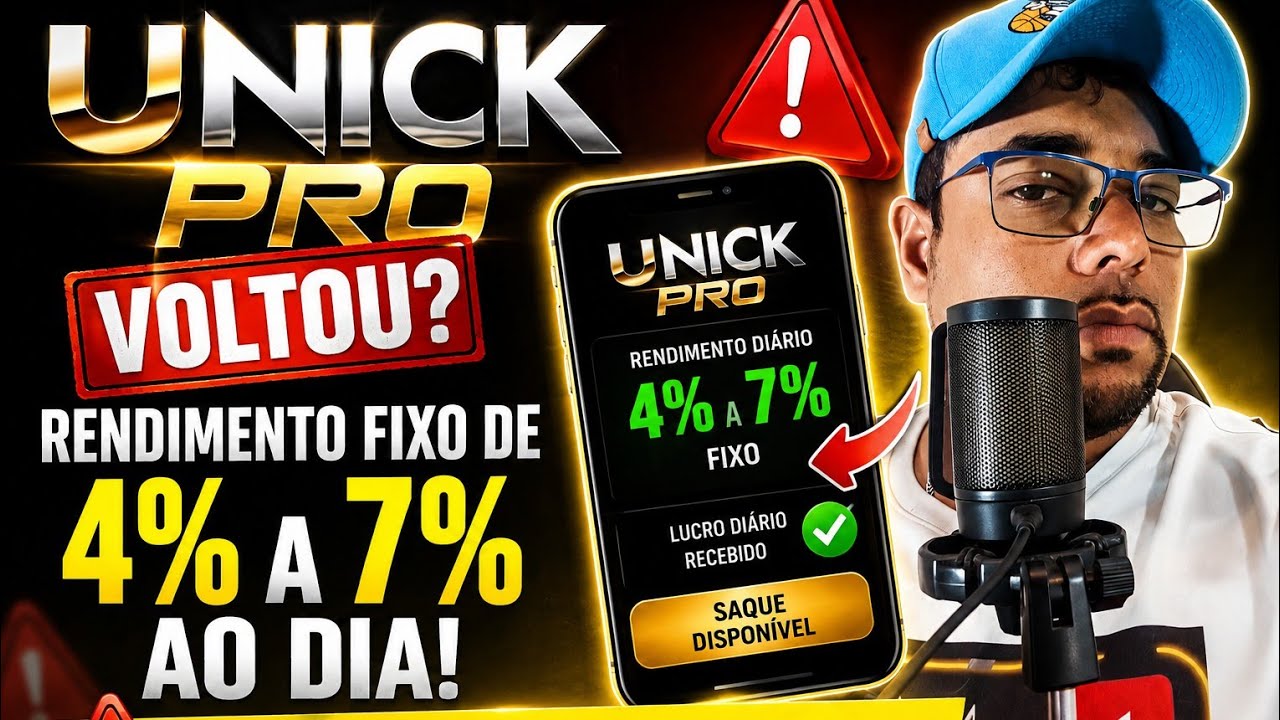
The promotion we archived describes a fixed return of 7% per day. The word used is fixed, not target, not projected, not historical. A fixed return is a promise of a set payout regardless of what markets do.
That language matters because it removes the two things that make an investment an investment: risk and variability. A fixed 7% a day is presented as a feature, not a warning. No minimum deposit is stated in the material we reviewed, and no payment methods are listed. There is no explanation of what the money is traded in, who trades it, or where it sits.
The material we collected is dated 7 October 2026, the earliest point at which the promotion is on record. We have no earlier or later snapshot.
What we were able to check
We checked for the things that let a person verify an operator. None were present.
- Operating entity: no company name, registration number or jurisdiction appears anywhere in the material we archived. Nothing identifies who is legally behind the product.
- Regulatory standing: no regulator search is on record for this name. Either it claims no jurisdiction at all, or the jurisdiction it claims does not license products of this kind.
- Custody: nothing states where client money is held or who can move it. Without a licensed custodian or a segregated account, a withdrawal is a promise, not a claim on an asset.
- Promoter structure: no affiliate, referral or paid-promotion structure was visible in the snapshot we collected.
That last point is not a clearance. Paid distribution is easy to hide, this is a single snapshot in time, and it says nothing about whether a withdrawal is ever honoured. It only means we did not see it in what we reviewed.
The arithmetic that breaks it
The advertised rate is 7% per day. On a $1,000 principal, that is $70 per day, or about $2,129.17 per month. Those figures are small enough to feel plausible.
Compounded, the same rate doubles the principal in about 10.2 days. After one year it multiplies the money by roughly 53,098,045,798 times. After three years the multiple runs past 1.49e+32. Annualised, 7% per day is about 5.31e+12%.
Put another way, $1,000 at a fixed 7% per day would pass one million dollars in about 0.28 years, under four months. There is no market, no trading strategy and no business on earth that pays a fixed 7% every single day and keeps doing it. The number is not aggressive; it is arithmetically impossible to sustain. That is the tell, and it does not require any inside information to see.
Why the numbers need new money
A fixed daily payout has to come from somewhere. If the operator is not earning 7% a day in a market, the only source of the next payout is the next deposit. Early participants can be paid from later ones, which is why some people genuinely receive money for a while and tell their friends it works.
That structure has a predictable shape. Payouts are honoured while deposits grow. When deposits slow, withdrawals are delayed, then conditioned on new deposits, then stopped. The people who lose most are usually the ones who joined last and the ones who reinvested their paper gains instead of testing a withdrawal.
Nothing in the material we archived shows a revenue source, a trading record, an audit, or a custodian. On the evidence we could check, the only visible inflow mechanism is deposits, and the only visible outflow is payouts to earlier depositors.
The strength-of-evidence check
Here is what we could and could not verify.
Verified from the material: the advertised rate of 7% per day, the use of the phrase fixed return, and the absence of a company name, registration number, jurisdiction and custodian. These are absences in the source material, not assumptions.
Not verified: whether anyone has been paid, how much money is involved, where the money goes, and who is behind the name. We have no regulator record for the name, and no confirmation that any jurisdiction has looked at it.
What the absences mean for your money: if there is no named entity, there is no one to sue. If there is no custodian, there is no asset to claim. If there is no regulator, there is no complaint route that can freeze or recover funds. A withdrawal that works today is not evidence that the structure is sound; it is evidence that deposits are still arriving.
What would change our assessment
We would revisit this if the promotion disclosed a registered operating company with a verifiable registration number and jurisdiction, a licensed custodian holding client money in a segregated account, and a regulator that licenses products of this kind in that jurisdiction. We would also want to see a trading or revenue record that explains where a fixed daily payout comes from.
None of that is present in the material we archived. Until it is, the arithmetic stands on its own: a fixed 7% per day cannot be paid from anything other than new deposits, and the people holding the money cannot be identified.
What to do if you are already in
- Do not send money to a product that promises a fixed daily return.
- If you have already deposited, request a withdrawal now and test whether a small amount actually arrives.
- Keep dated records of every payment, message and promised payout.
- Search the operator's name against your country's financial regulator before doing anything else.
- Ask, in writing, for the company name, registration number, jurisdiction and the name of the custodian holding client money.
- Treat any answer that avoids those four items as a reason to stop.
- Report the promotion to your national financial regulator or consumer protection body.
- Speak to a licensed financial adviser before committing any amount you cannot afford to lose.
In plain terms, what the record shows
- Promises a fixed return of about 7% per day — no regulated investment product can hold to a guaranteed per-day payout.
- Uses guarantee language: “fixed return”.
- No company, registration number or jurisdiction is named, so there is no one to hold legally accountable.
Questions readers ask about this one
Is a fixed 7% daily return realistic?
No. At 7% per day, $1,000 becomes about $1 million in under four months and multiplies roughly 53 billion times in a year. No market or business sustains that. A fixed daily payout can only be funded by new deposits once real earnings fall short.
How do I check whether UNICK PRO is registered?
Search the name against your national financial regulator's public register. If the promotion names no company, no registration number and no jurisdiction, there is nothing to check and no one to hold accountable.
What happens if I cannot withdraw my money?
If there is no named entity and no custodian, there is no asset to claim and no one to sue. Report it to your financial regulator and keep every record of the payments and messages.
Someone I know says they already got paid. Does that prove it works?
No. Early payouts are how these structures keep deposits coming in. A payment that arrives today shows deposits are still flowing, not that the underlying return is real.
What the promised number actually compounds to
UNICK PRO advertises roughly 7% per day.
Compounded and left alone, that is:
| Horizon | What the promise implies |
|---|
| One year | about 5.31e+12% — $100 becomes $5.3T |
| Three years | $100 becomes $1.5e+34 |
| Balance doubles | every 10.2 days |
| $1,000 to $1,000,000 | about 0.28 years |
| Payout owed on $1,000 | $2.1K every month, forever |
Compounded, no fees, no tax, no slippage, and — crucially — assuming every withdrawal is actually
paid. The last row is the interesting one: a fixed payout has to be funded every single month, and the money has
to come either from a real position earning it or from whoever deposits next.
Check the same figure yourself with the
daily return calculator,
put it next to what is actually guaranteed with the
guaranteed-return check,
or ask where the payout comes from in the
new-deposit calculator.
| Starting from $1,000 | Reached after | Then pays out |
|---|
| $2.0K |
10.2 days |
$140.00 per day |
| $10.0K |
34.0 days |
$700.00 per day |
| $100.0K |
68.1 days |
$7.0K per day |
| $1.0M |
102.1 days |
$70.0K per day |
Strength-of-evidence check
18/ 100 checkable
Nothing independently verifiable
Nothing in the claims about the operator, supervision or custody can be checked from public records.
Registered operating entity
0/30
No operating company, registration number or jurisdiction is stated anywhere in the material we archived. Nothing identifies who is legally behind the product.
Regulatory standing
0/25
No regulator search is on record for this name. Either it claims no jurisdiction at all, or the jurisdiction it claims does not license products of this kind.
Promoter & referral structure
18/25
No affiliate, referral or paid-promotion structure was visible in the material we archived. That is not a clearance: paid distribution is easy to hide, this is a snapshot in time, and it says nothing about whether a withdrawal is ever honoured.
Who holds the money
0/20
Nothing states where client money is held or who can move it. Without a licensed custodian or a segregated account, a withdrawal is a promise, not a claim on an asset.
This number measures how much can be checked, and a low score is the dangerous case: nobody
outside the operation can verify who runs it, whether it is supervised, or where the money sits — and unverifiable
is where the loss risk lives. Read a low score as a warning, not as a technicality. A high score buys you nothing
either: a well-documented operation is still a proposition you have to check yourself before you send any money.
What the register holds on this name
- Name as promoted
- UNICK PRO
- Also seen as
- UNICK PRO
- Guarantee wording used
- “fixed return”
- First logged
- 7 October 2026
- Last re-checked
- 11 October 2026
Think this entry is wrong?
Entries are re-checked and corrections are published in the changelog rather than made quietly. If a project has
shut down, changed hands or can produce something we could not find, tell us.
Correct or appeal this entry