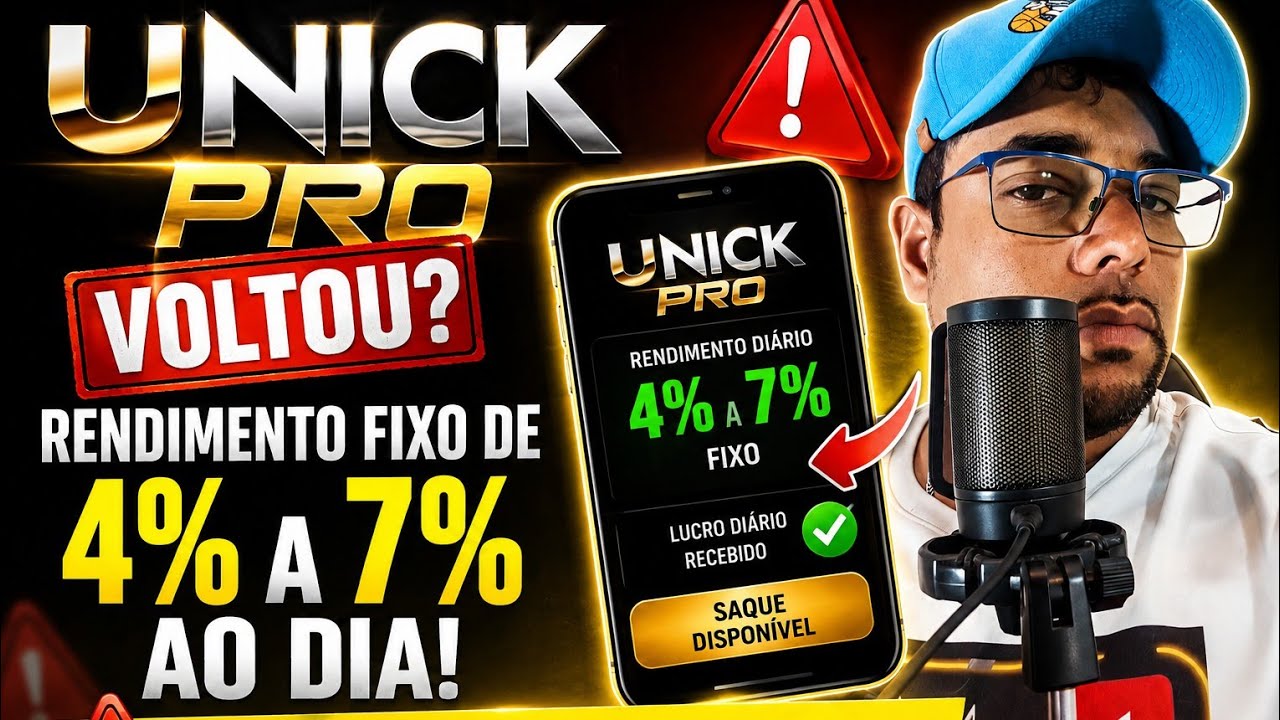
The pitch, in its own words
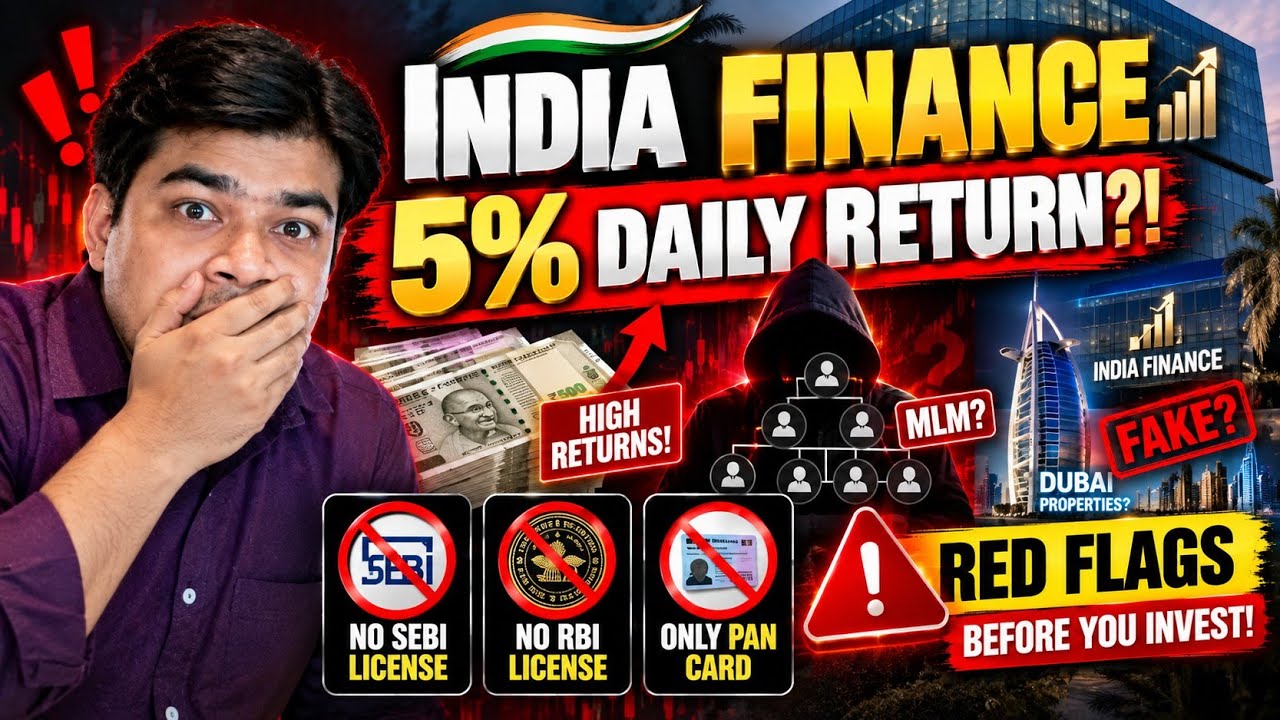
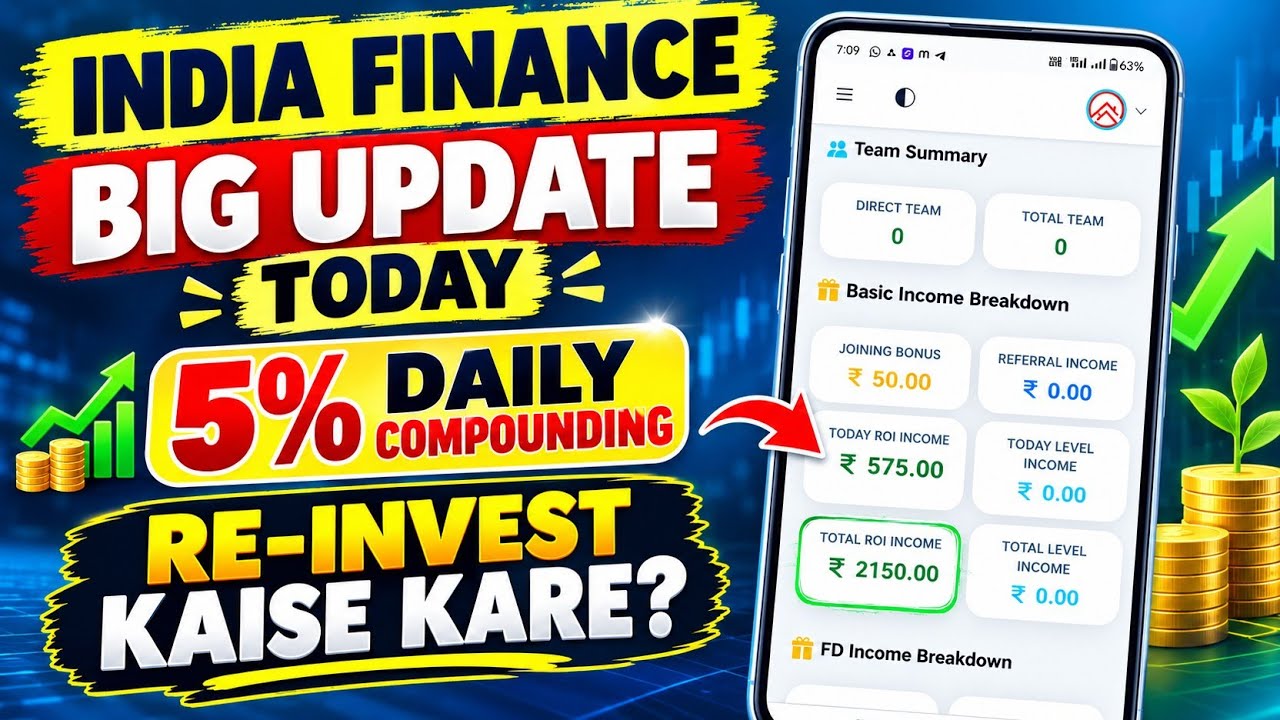
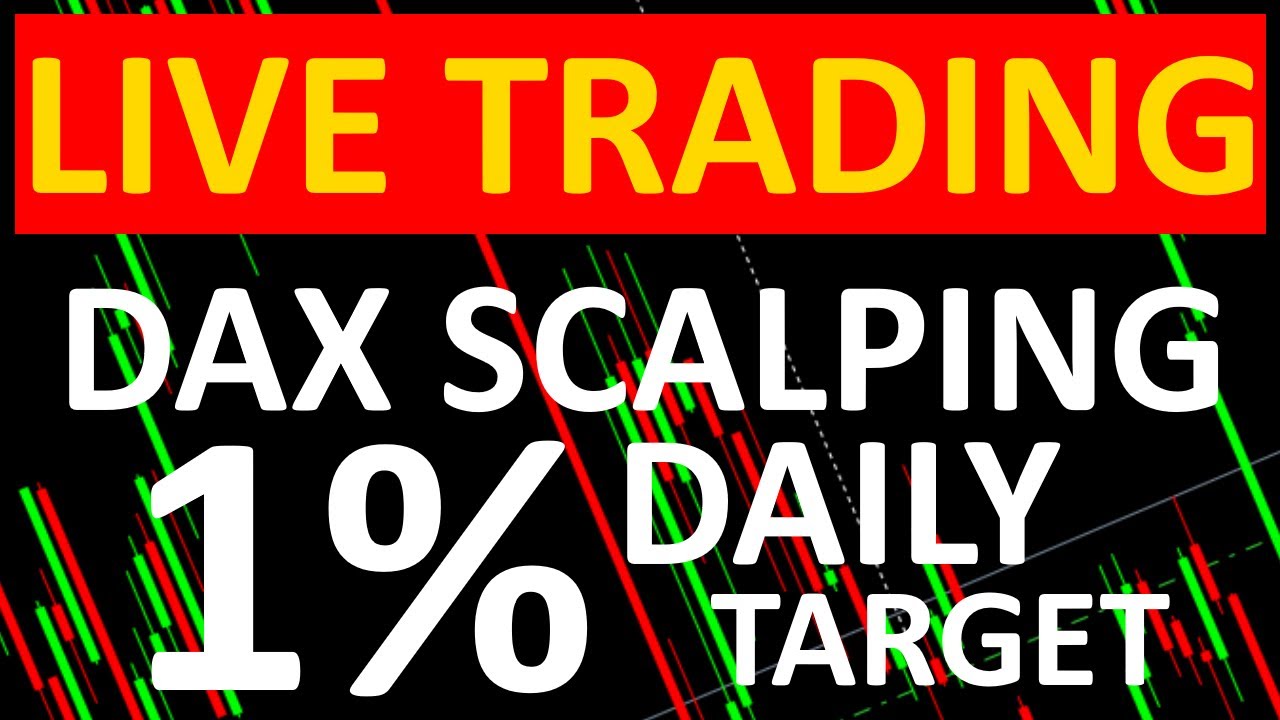
The promotion we reviewed offers a fixed return of 1% per day and calls it guaranteed. On a $1,000 deposit, that is $10 a day and about $304.17 a month. Nothing in the material states a minimum deposit, a lock-up period, or how the money is meant to earn the return.
The word guaranteed is doing the heavy lifting. It is attached to a per-day number, which means the promise has to be met every single day, including weekends and holidays, without a single losing day. No regulated investment product is sold that way, because returns move with markets, and a fixed daily payout is a promise about the future that no licensed manager can make.
What we were able to check
We checked four things a person can normally check before sending money.
- Who operates it. No operating company, registration number or jurisdiction is stated anywhere in the material we archived. Nothing identifies who is legally behind the product.
- Regulatory standing. No regulator search is on record for this name. Either it claims no jurisdiction at all, or the jurisdiction it claims does not license products of this kind.
- Who holds the money. Nothing states where client money is held or who can move it. Without a licensed custodian or a segregated account, a withdrawal is a promise, not a claim on an asset.
- How it was distributed. No affiliate, referral or paid-promotion structure was visible in the material we archived.
That last point is the only one that came back clean, and it is the least useful one. Paid distribution is easy to hide, this is a snapshot in time, and it says nothing about whether a withdrawal is ever honoured.
The arithmetic that breaks it
The numbers are simple enough to check with a calculator.
- 1% per day compounds to 3,678.34% a year.
- At that rate, a balance doubles in about 69.7 days.
- After one year, $1,000 becomes about $37,780.
- After three years, the same $1,000 would be about $53,939,170.
- At 1% per day, a starting balance reaches $1 million in about 1.9 years.
Those are not projections. They are what the advertised rate produces if it is paid exactly as described. The three-year figure is the one to sit with: a $1,000 deposit would need to become roughly $54 million. If that were real, the operator would be one of the largest pools of capital in the world within a few years, and would have no reason to advertise in group chats.
Why the numbers need new money
A fixed daily payout has to be funded every day. If the underlying activity does not produce 1% a day, the only way to keep paying the advertised rate is with money from later participants. That is the structure the numbers point to: early balances are paid from new deposits, and the promise holds only as long as new money arrives.
That structure has a predictable failure point. When deposits slow, withdrawals stop being paid, and the people still holding a balance find out that the number on the screen was never a claim on anything. Nothing in the material we archived explains where the daily 1% comes from, which is the one question that would separate a real business from a payout queue.
The strength-of-evidence check
Here is what we could and could not verify.
Could verify: the advertised rate and the guarantee language, both taken directly from the promotion. The arithmetic follows from the rate. The absence of a company name, registration number, jurisdiction and custodian is a fact about the material itself, not an inference.
Could not verify: who operates BitsGap, where it is based, whether it is registered anywhere, who holds deposits, and whether any withdrawal has ever been paid. We also cannot say whether the promotion is still running. It was first observed on 2026-10-07, and that is the earliest point at which it is on record.
On the evidence we could check, the structure matches a guaranteed-return pitch with no accountable operator. The missing pieces are not small gaps. They are the pieces that would let a depositor find out who to pursue if the payments stop.
What would change our assessment
An assessment like this is not permanent. It would change if the following were produced and could be checked independently.
- A named operating company, with a registration number and a jurisdiction that can be looked up.
- A licence or authorisation covering products of this kind, from the regulator in that jurisdiction, confirmed directly with the regulator rather than from a screenshot.
- A licensed custodian or segregated account holding client money, confirmed with the custodian.
- A clear explanation of how a fixed 1% daily return is generated, with the underlying activity named.
- A documented withdrawal history that a depositor can test with a small amount.
Until then, the parts that matter are the parts that are missing. A guaranteed 1% a day is not a return you can check; it is a promise from someone who has not said who they are.
What to do if you are already in
- Do not send money to a product that promises a fixed daily return described as guaranteed.
- Ask for the legal name of the operating company, its registration number and its jurisdiction, and look each one up yourself.
- Check the regulator in that jurisdiction directly, using the contact details on the regulator's own site, not a link from the promotion.
- Ask who holds client money and whether the account is segregated; get the custodian's name and confirm it with the custodian.
- If you have already deposited, test a small withdrawal early and keep the record of what happened.
- Keep copies of every ad, message, payment confirmation and balance screenshot.
- Report the promotion to the financial regulator in your country and to the platform where you saw it.
- Talk to a licensed financial adviser before committing any amount you cannot afford to lose.
In plain terms, what the record shows
- Promises a fixed return of about 1% per day — no regulated investment product can hold to a guaranteed per-day payout.
- Uses guarantee language: “guaranteed”.
- No company, registration number or jurisdiction is named, so there is no one to hold legally accountable.
Questions readers ask about this one
Is BitsGap a scam?
We are not making a legal finding. What we can say is that the promotion we archived promises a guaranteed 1% per day, names no operating company, no registration number, no jurisdiction and no custodian for client money. On the evidence we could check, nothing can be reconciled with a real, licensed product.
Is 1% per day realistic?
As a fixed daily payout described as guaranteed, no. Compounded, 1% a day is 3,678.34% a year and doubles a balance in about 69.7 days. A $1,000 deposit at that rate would be roughly $37,780 after one year and about $53,939,170 after three. No licensed product is sold on those terms.
Can I withdraw my money from BitsGap?
We have no verified withdrawal record for BitsGap. Nothing in the material we archived states where client money is held or who can move it. If you have deposited, test a small withdrawal early, keep the record, and treat a smooth small withdrawal as no guarantee about a larger one.
Who is behind BitsGap?
The material we archived does not say. No operating company, registration number or jurisdiction is stated. Without that, there is no identified party to hold accountable if payments stop.
What the promised number actually compounds to
BitsGap advertises roughly 1% per day.
Compounded and left alone, that is:
| Horizon | What the promise implies |
|---|
| One year | 3,678.34% — $100 becomes $3.8K |
| Three years | $100 becomes $5.4M |
| Balance doubles | every 69.7 days |
| $1,000 to $1,000,000 | about 1.9 years |
| Payout owed on $1,000 | $304.17 every month, forever |
Compounded, no fees, no tax, no slippage, and — crucially — assuming every withdrawal is actually
paid. The last row is the interesting one: a fixed payout has to be funded every single month, and the money has
to come either from a real position earning it or from whoever deposits next.
Check the same figure yourself with the
daily return calculator,
put it next to what is actually guaranteed with the
guaranteed-return check,
or ask where the payout comes from in the
new-deposit calculator.
| Starting from $1,000 | Reached after | Then pays out |
|---|
| $2.0K |
69.7 days |
$20.00 per day |
| $10.0K |
231.4 days |
$100.00 per day |
| $100.0K |
1.3 years |
$1.0K per day |
| $1.0M |
1.9 years |
$10.0K per day |
Strength-of-evidence check
18/ 100 checkable
Nothing independently verifiable
Nothing in the claims about the operator, supervision or custody can be checked from public records.
Registered operating entity
0/30
No operating company, registration number or jurisdiction is stated anywhere in the material we archived. Nothing identifies who is legally behind the product.
Regulatory standing
0/25
No regulator search is on record for this name. Either it claims no jurisdiction at all, or the jurisdiction it claims does not license products of this kind.
Promoter & referral structure
18/25
No affiliate, referral or paid-promotion structure was visible in the material we archived. That is not a clearance: paid distribution is easy to hide, this is a snapshot in time, and it says nothing about whether a withdrawal is ever honoured.
Who holds the money
0/20
Nothing states where client money is held or who can move it. Without a licensed custodian or a segregated account, a withdrawal is a promise, not a claim on an asset.
This number measures how much can be checked, and a low score is the dangerous case: nobody
outside the operation can verify who runs it, whether it is supervised, or where the money sits — and unverifiable
is where the loss risk lives. Read a low score as a warning, not as a technicality. A high score buys you nothing
either: a well-documented operation is still a proposition you have to check yourself before you send any money.
What the register holds on this name
- Name as promoted
- BitsGap
- Also seen as
- BitsGap
- Guarantee wording used
- “guaranteed”
- First logged
- 7 October 2026
- Last re-checked
- 7 October 2026
Think this entry is wrong?
Entries are re-checked and corrections are published in the changelog rather than made quietly. If a project has
shut down, changed hands or can produce something we could not find, tell us.
Correct or appeal this entry